Suspicious Transaction Reporting for Singapore Life Insurers After the 2025 MAS AML/CFT Revisions
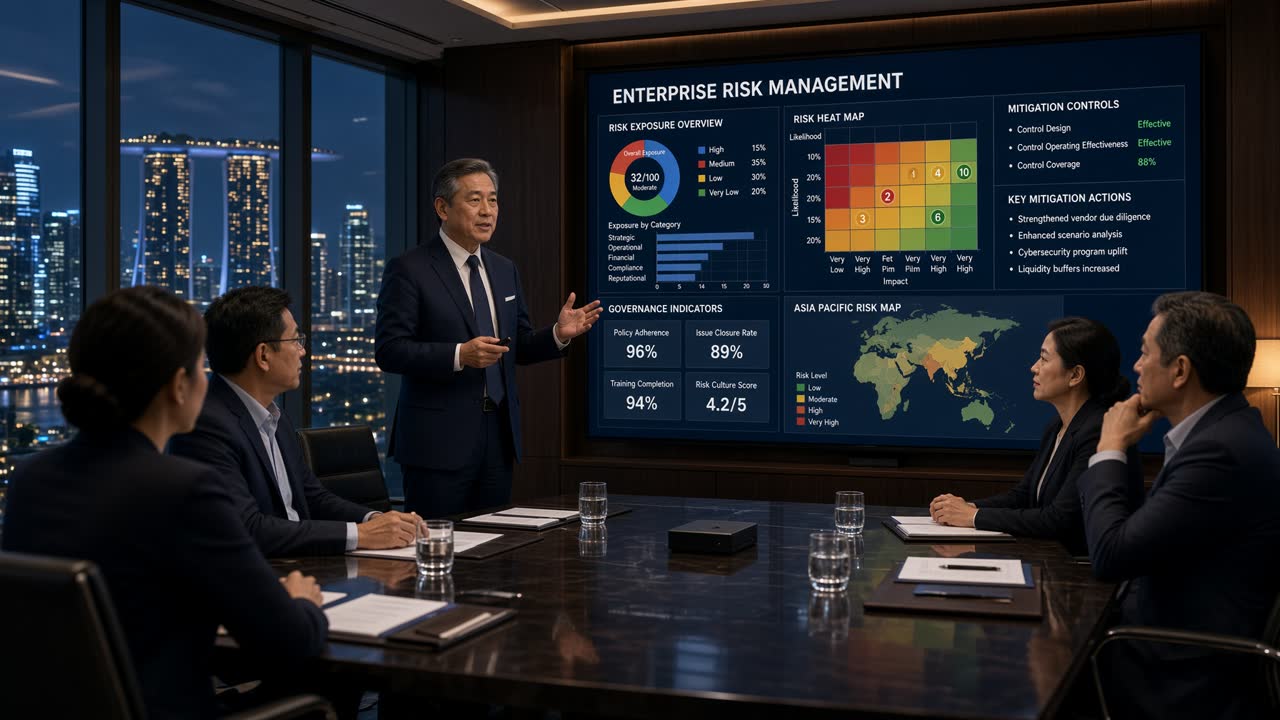
A practical guide to rebuilding the suspicious transaction report process at a Singapore life insurer under MAS Notice 314 after the 2025 revisions. It covers alert sources, timing, narrative quality, screening, tipping-off controls and governance.
A suspicious transaction report for life insurers in Singapore must be filed with the Suspicious Transaction Reporting Office (STRO) promptly once suspicion is formed, and the insurer must be able to show how that suspicion was identified, escalated, assessed and documented. After the 2025 revisions to the MAS AML/CFT framework, supervisors are looking less at whether a report was eventually filed and more at the quality of the process behind it: the alert sources, the timing of each decision, the written rationale and the narrative that reaches STRO. This article focuses on how to rebuild that process for a life insurer working under MAS Notice 314, and complements our broader gap-assessment guide to the 2025 revisions.
The legal basis for STR filing
Reporting obligations for life insurers come from several layers. The Corruption, Drug Trafficking and Other Serious Crimes (Confiscation of Benefits) Act 1992 (CDSA) requires a person who knows or has reasonable grounds to suspect that property represents the proceeds of criminal conduct to lodge a report. The Terrorism (Suppression of Financing) Act 2002 (TSOFA) imposes a parallel duty for terrorism financing. MAS Notice 314 then turns these duties into operational requirements for life insurers: policies and procedures for escalation, designated reporting channels, record keeping and cooperation with the authorities.
The practical consequence is that the obligation is personal as well as institutional. An agent, a bancassurance partner or an underwriter who forms a suspicion cannot treat it as a matter for the compliance team alone, and the insurer must make sure its people know how to pass the concern on. Reports are submitted to STRO through its electronic filing system, and the insurer should confirm that the designated filers hold current access and that a deputy is registered for leave and absence.
Read the final text of Notice 314 and any applicable guidelines directly. Summaries, including this one, will not capture every clause, and the amended wording governs.
What the 2025 revisions mean for reporting
The 2025 revisions sharpened three areas that touch reporting. First, expectations on the enterprise-wide risk assessment now extend to proliferation financing, which widens the range of alerts that can lead to a report. Second, MAS has emphasised the internal route from detection to decision, including who decides, how quickly and on what record. Third, supervisory attention to screening has increased, because screening hits are one of the most common triggers for an STR and one of the most common sources of weak documentation.
For a life insurer, this means the STR procedure should be reviewed as part of the same exercise as the risk assessment, not as a standalone policy refresh. If the risk assessment identifies single premium investment-linked business, third-party payments or policy loans as higher risk, the alert rules and escalation triggers for those products should be traceable to that assessment.
Alert sources and escalation triggers
A defensible STR process starts with a complete inventory of alert sources. For life insurers these typically include:
- Screening hits against sanctions and designated person lists at onboarding, at payout and on periodic rescreening
- Transaction monitoring alerts on premium patterns, early surrenders, partial withdrawals and policy loans
- Front-line escalations from tied agents, financial advisers and bancassurance staff
- Claims and underwriting referrals, including adverse media on customers or beneficiaries
- Requests from law enforcement, such as production orders or enquiries about a customer
Each source needs a documented route to the AML/CFT compliance officer and a defined first response time. Behavioural red flags specific to life products deserve explicit mention in training and procedures: premium paid by an unrelated third party, overfunding followed by a quick surrender, policy assignments to unconnected parties, reluctance to explain the source of funds, and cancellations within the free-look period that produce refunds to a different account. Linking these to the findings from your source of wealth and source of funds controls shows MAS that detection and onboarding controls work together.
Timing, decision records and the narrative
Notice 314 expects reports to be filed promptly. In practice that means the insurer should set an internal service level for each stage: acknowledging the alert, completing the investigation, reaching a file or no-file decision, and submitting the report. Check your wording against the notice rather than inventing a standard that conflicts with it, and measure actual performance. Sample closed alerts from the last twelve months and record the elapsed days between detection and decision. A pattern of long, unexplained gaps is the finding supervisors most often cite.
Every decision, including a decision not to file, needs a written rationale reviewed by someone other than the investigator. Reviewers should be able to see what was checked, which documents were obtained and why the activity was or was not considered suspicious.
The narrative itself should answer five questions: who the customer is, what the policy and the unusual activity are, what checks were performed, why the activity is inconsistent with the customer profile, and what the insurer has done in response. A report that only lists a policy number and a premium amount forces the authorities to rebuild the case. A fixed template, populated from the case management system and reviewed by a second person, is the simplest way to improve consistency.
Screening and the link to reporting
AML/CFT insurer screening produces a large share of reportable events, so its design affects reporting volume and quality. Confirm that screening covers policyholders, insured persons, beneficial owners, payors, assignees and beneficiaries, and that it runs at onboarding, at claim or surrender payout and on a defined periodic cycle. Confirm too that list updates are applied within a fixed time and that the matching logic has been tested, including name variations and transliterations common in Asian customer bases.
When a true match against a designated person list occurs, other obligations apply alongside the STR, including freezing and notification requirements under the relevant regulations. The procedure should separate these two tracks clearly so that a hit is not treated only as a reporting matter. Document false-positive handling as well: an analyst who clears a hit without a recorded reason creates the same exposure as one who ignores it.
Tipping-off, confidentiality and customer handling
Tipping off is a criminal offence under the CDSA. Once a report has been filed or is under consideration, staff must not disclose that fact to the customer or any person who might be alerted. Insurers often get this wrong at the point of friction: the customer service agent who is asked why a surrender is delayed, or the claims handler who requests additional documents. Provide approved holding scripts, restrict case notes to the compliance team and make sure the case management system limits access by role.
Decisions on whether to continue the relationship, delay a payment or terminate a policy after an STR should be taken by senior management with legal input, and should be recorded separately from the reporting file. Continuing to process transactions that raise the same concern, without any documented consideration, is a recurring supervisory criticism.
Governance, records and testing
Management information should reach the board or its risk committee on a regular basis: number of alerts by source, conversion to reports, time to decision, quality assurance results and open remediation items. A sudden fall in reports without a change in business mix is itself a signal worth explaining.
Record keeping must cover the report, supporting documents, the decision record and the investigation notes for the retention period set by the applicable notice and the CDSA. Hold them in a form that can be produced quickly if MAS or law enforcement asks.
Testing completes the loop. Internal audit or an external reviewer should sample alerts from each source, retest the screening logic and check that the procedure, training and practice align. Where the Singapore operation relies on a group AML function, confirm that the group process meets local requirements on filing channel, language, deadlines and the role of the local compliance officer.
Updating your procedures: a short sequence
A workable update for a life insurer can run over eight to ten weeks. Start by mapping the current STR procedure against the final Notice 314 text and recording each gap. Then rebuild the alert inventory and escalation routes, set internal service levels, introduce the narrative template and the second-person review, and refresh screening tests. Finish with training for agents, partners and investigators, and a board paper recording what changed and why. Keep the dated evidence of each step, because the record of what you did and when is what MAS will ask to see.
If your STR process needs an independent review or a rebuild ahead of the next MAS engagement, speak to our team about AML/CFT advisory for Singapore life insurers.
Questions about how this applies to your organisation? Our consultants are available to discuss your specific position.
More in Risk
Briefing details
- Category
- Risk
- Reading time
- 8 min read
- Published
- 20 November 2026