2025 AML/CFT Updates for Singapore Insurers: Proliferation Financing and STR Changes
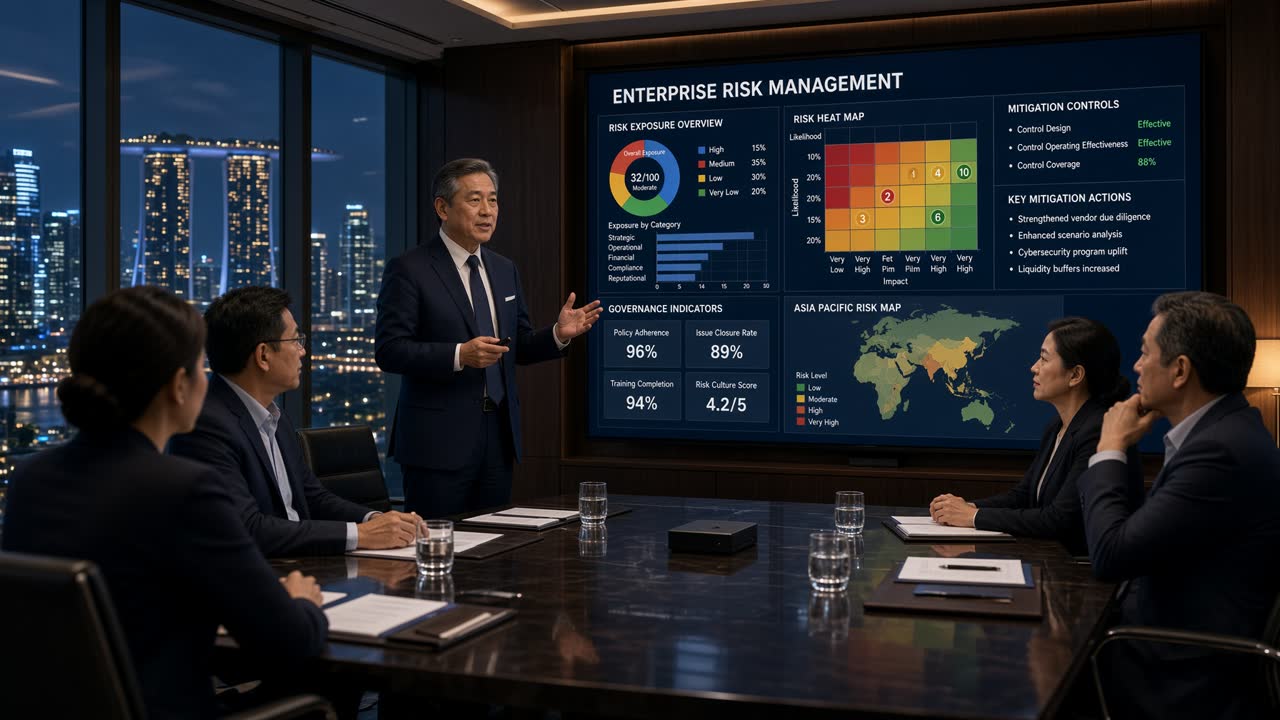
A gap-assessment guide to the 1 July 2025 MAS AML/CFT revisions for Singapore insurers. Covers which instrument applies to life and non-life insurers, proliferation financing risk assessment and suspicious transaction reporting controls.
Singapore insurers should treat the 1 July 2025 revisions to the MAS AML/CFT requirements as a gap-assessment exercise, not a policy refresh. For AML CFT insurance Singapore MAS compliance, the practical questions are whether your enterprise-wide risk assessment now covers proliferation financing, whether your suspicious transaction reporting process meets the expectations MAS has set out, and whether your documentation can show the board has engaged with both. This guide sets out how to run that assessment, and where life insurers under Notice 314 differ from general insurers and reinsurers that work from MAS guidelines.
Which instrument applies to which insurer
The first step is to establish which instrument binds your entity. MAS Notice 314 (Prevention of Money Laundering and Countering the Financing of Terrorism, Life Insurers) is a legally binding notice. Contravention can lead to enforcement action under the Financial Services and Markets Act 2022 and the MAS Act, including financial penalties. Life insurers, and composite insurers in respect of their life business, should read Notice 314 as the baseline.
General insurers and reinsurers are not in the same position. Their business is generally viewed as lower risk for money laundering, and MAS has historically addressed them through guidelines rather than the Notice 314 regime. The guidelines are not a licence to do less. MAS applies its supervisory expectations through inspections and thematic reviews, and a general insurer that cannot evidence a risk-based approach will struggle in a supervisory discussion regardless of the instrument's formal status.
A common error is to assume that because a group policy is written in Singapore, the group AML/CFT standard satisfies MAS. It may not. Group policies are usually calibrated to the strictest regime in the group, but local requirements on record keeping, reporting channels and the role of the Singapore compliance function must be mapped explicitly. A short applicability matrix, signed off by the Chief Compliance Officer, is a sensible first deliverable.
What changed on 1 July 2025
The revisions MAS issued took effect on 1 July 2025. Three themes matter for most insurers. First, proliferation financing is now expressly part of the risk assessment and control framework, rather than an implicit extension of terrorism financing. Second, expectations around suspicious transaction reporting have been sharpened, particularly on timing, internal escalation and the quality of the narrative filed. Third, MAS has continued to push for risk assessment that is genuinely tied to the insurer's own products, distribution channels and customer base, not a template borrowed from a bank.
Before you start, obtain the final text of the notice or guidelines applicable to your licence and read them against your current policy set. Summaries, including this one, are not a substitute. Where a clause is ambiguous, record the interpretation you adopted and who approved it. That record is often what separates a finding rated as a drafting gap from one rated as a control failure.
Proliferation financing assessment for insurers
Proliferation financing is the provision of funds or financial services used in the manufacture, acquisition, development or transfer of weapons of mass destruction and their delivery systems. The relevant sanctions context in Singapore includes United Nations Security Council resolutions implemented through MAS regulations, notably those on Iran and the Democratic People's Republic of Korea.
A proliferation financing assessment for insurers should answer a narrow set of questions. Which of our products allow value to move quickly or be redirected, for example single premium investment-linked policies, policy loans, surrenders and third-party payment arrangements? Which customer segments carry exposure to jurisdictions subject to targeted financial sanctions or to trade and shipping sectors where evasion is common? Which of our reinsurance, marine, trade credit or specialty lines could cover vessels, cargo or counterparties linked to sanctioned parties? And which control already in place, such as screening, would detect a proliferation-related name or pattern?
For life insurers, the exposure is typically in investment-linked and single premium business and in payments to or from third parties. For general insurers and reinsurers, the exposure is more often in marine hull and cargo, trade credit, and political risk covers, where the insured interest itself can be the point of evasion. Document the inherent risk, the control effectiveness and the residual risk for each area, and keep the scoring method consistent with your existing money laundering risk assessment so the board sees one coherent picture.
Screening deserves specific attention. Confirm that your sanctions lists are updated on a defined schedule, that screening covers beneficial owners, assignees and payees as well as policyholders, and that vessel and entity data are screened where relevant. Test the matching logic; an unrefreshed list or an overly narrow name-matching threshold is the most common weakness in practice.
Suspicious transaction reporting changes
Suspicious transaction reporting insurers Singapore obligations sit under the Corruption, Drug Trafficking and Other Serious Crimes (Confiscation of Benefits) Act, and reports are filed with the Suspicious Transaction Reporting Office through its electronic channel. The revisions put more weight on the internal process leading to the report, so the assessment should test that process end to end.
Start with detection. List the alert sources feeding your investigations, which typically include screening hits, transaction monitoring rules, front-line escalations from agents, brokers and bancassurance partners, and claims or underwriting referrals. Confirm that each source has a documented path to the AML/CFT compliance officer, and that agents and distribution partners know how to escalate without tipping off the customer.
Then test timeliness. MAS expects reports to be filed promptly once suspicion is formed, and expects a defined internal deadline for moving an alert from detection to a decision. Sample closed alerts and measure the elapsed time between the alert, the decision to file or not file, and the submission. Where the decision was not to file, check that the rationale is written down and reviewable by someone other than the analyst.
Finally, test quality. A report that lists a policy number and a transaction amount without explaining why the activity is unusual forces the authorities to reconstruct the case. Build a narrative template that captures the customer profile, the unusual activity, the checks performed and the reason for suspicion, and check a sample of filed reports against it. Also confirm that you retain the report, supporting documents and the decision record for the period required under the applicable notice.
Governance, training and record keeping
Both areas of change land on governance. The board and senior management should receive the updated enterprise-wide risk assessment, including the proliferation financing component, and the minutes should show discussion and approval, not simply receipt. If the risk assessment was prepared by an outsourced provider or the group function, show how the Singapore management team challenged and adopted it.
Training needs to reflect the changes. Front-line staff, tied agents and bancassurance partners should understand what proliferation financing looks like in an insurance context and how to escalate. Compliance and investigations staff need deeper training on narrative quality and on reporting timelines. Keep attendance and assessment records, and refresh training for new joiners and for roles with higher exposure.
Independent testing is the third element. Internal audit or an external reviewer should test the revised controls within the next audit cycle. If your function relies on group audit, confirm the scope covers Singapore-specific requirements. See the overlap with our earlier briefing on AML/CFT in the Asia Pacific insurance sector for the wider regional supervisory picture.
A practical gap-assessment sequence
A workable programme for a mid-sized insurer fits into a single quarter. In the first three weeks, confirm the applicable instrument, extract each obligation into a register and assign an owner. In weeks four to eight, refresh the enterprise-wide risk assessment with the proliferation financing component and test the screening controls. In weeks nine to ten, review the suspicious transaction reporting process using a sample of recent alerts, covering timeliness, rationale and narrative quality. In the final weeks, update policies and procedures, deliver training, and take the findings, remediation plan and revised risk assessment to the board and risk committee.
Track each gap with an owner, a deadline and a closure test. Findings that remain open at the next supervisory contact are weighed more heavily when the insurer had already identified them and did not act.
Common weaknesses seen in supervisory reviews
Several weaknesses recur. Risk assessments are generic, with no product-level detail. Proliferation financing is added as a single line in the terrorism financing section. Reinsurance and specialty business is excluded on the basis that it is low risk, without a written rationale. Alert investigations are closed without a recorded reason. And board papers describe the framework without evidencing challenge. Each of these can be closed with modest effort if identified early.
Next steps
If you need an independent view on whether your framework meets the revised requirements, our team can run the gap assessment, refresh the enterprise-wide risk assessment and test your suspicious transaction reporting process. Read more about our AML/CFT advisory work, or contact us to scope an engagement.
Questions about how this applies to your organisation? Our consultants are available to discuss your specific position.
More in Regulatory
Briefing details
- Category
- Regulatory
- Reading time
- 8 min read
- Published
- 30 October 2026