Choosing an Insurance Regulatory Consultant in Singapore: What to Look For
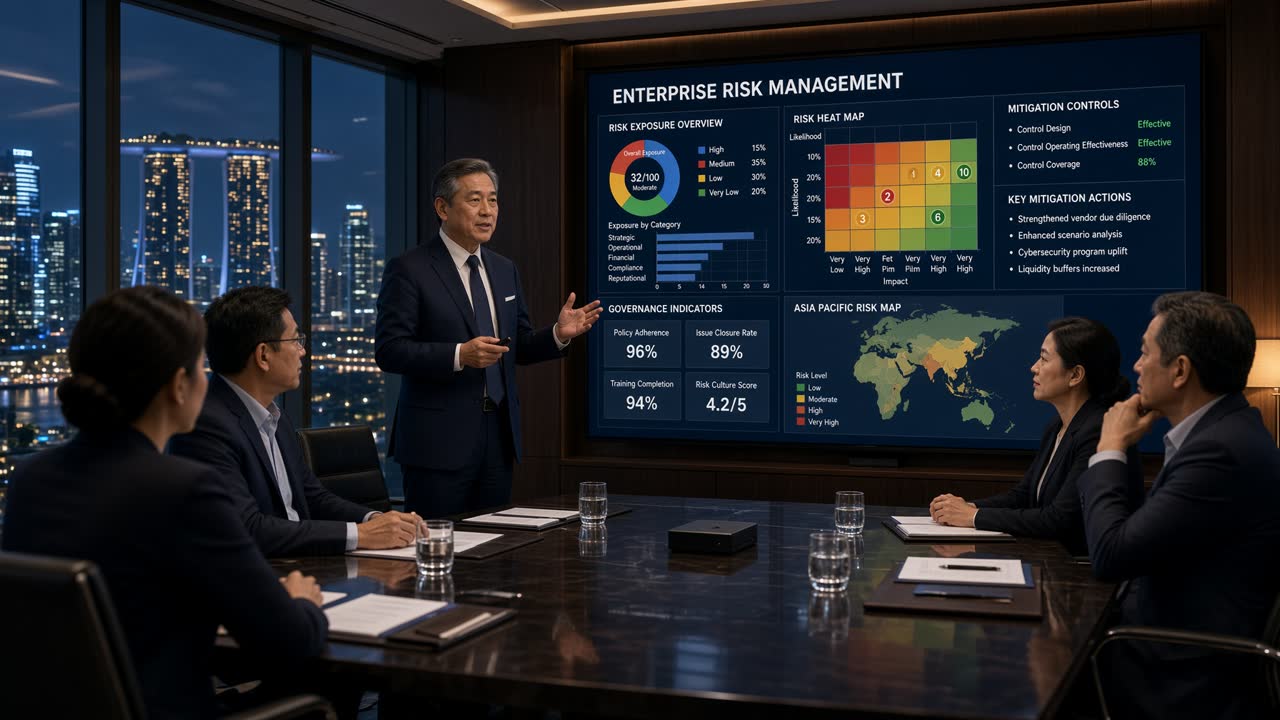
A practical guide to selecting the right insurance regulatory consultant for MAS licensing, compliance and risk advisory work -- what to ask, what to look for, and what to avoid.
The Difference a Good Consultant Makes
Engaging an insurance regulatory consultant is not a commodity purchase. The quality of advice on a MAS licence application, an ORSA framework or an AML/CFT remediation can determine whether a project goes smoothly or stalls -- and in some cases whether a licence is granted or a regulatory inspection passes without findings.
Singapore is one of the most demanding regulatory environments in Asia Pacific. MAS expects high standards of governance, capital management and compliance from licensed insurers, financial advisers and other regulated entities. The regulatory framework is detailed, frequently updated, and enforced rigorously. Advisers who do not work in it daily will give advice that is technically correct but practically unhelpful.
This guide sets out what to look for when choosing a regulatory consultant for insurance and financial services work in Singapore.
Practitioner Experience, Not Only Advisory Experience
There is a difference between a consultant who has advised on regulatory matters and one who has held responsibility for them -- as a regulator, a compliance officer, a chief actuary or a senior risk manager inside a licensed entity.
Practitioner experience matters because regulatory work in Singapore is not primarily about reading guidelines and applying them mechanically. It involves judgment about what MAS expects in practice, how to present a position in a submission, where the areas of regulatory sensitivity lie, and what questions an inspector is likely to ask. That judgment comes from having been in the room, not from having read about it.
When assessing a consultant's experience, ask specifically about the types of entities they have worked with, the jurisdictions covered, the regulatory frameworks they work with regularly, and whether their team includes people who have worked inside licensed entities rather than exclusively in professional services.
Depth in the Specific Area You Need
Insurance regulatory work in Singapore spans multiple distinct areas: licensing and MAS submissions, capital and solvency (RBC2), risk management frameworks (ERM and ORSA), AML/CFT compliance, actuarial work, and transaction advisory. Very few firms have genuine depth across all of these.
A firm that claims broad expertise but cannot name specific engagements in the area you need should be treated with caution. Ask for examples of comparable work. For licensing work, ask about specific MAS licence applications they have completed and the timeline from submission to approval. For ORSA advisory, ask what an ORSA review typically covers and what the most common gaps they find are. For AML/CFT, ask about their experience with MAS inspections and the types of findings they typically see.
The answers will quickly reveal whether the expertise is genuine or general.
Singapore Regulatory Knowledge That Is Current
MAS regulatory requirements change frequently. New notices, guidelines, consultation papers and industry engagement updates are issued regularly, and compliance standards evolve through regulatory inspections and industry guidance even when formal requirements do not change.
A consultant whose knowledge of MAS regulation is based primarily on their training or on work done several years ago will miss important nuances. Ask when the consultant last worked on a specific regulatory area and what recent changes they are aware of. For RBC2, ask about the most recent MAS updates to the capital framework. For AML/CFT, ask about the latest MAS guidance on customer due diligence and beneficial ownership. The answers will indicate whether their knowledge is current.
Independence and Objectivity
Regulatory advisory work requires an adviser who will give you an honest assessment, not one who tells you what you want to hear. This is particularly important for independent reviews -- ORSA reviews, ERM assessments, AML/CFT reviews -- where the value of the engagement depends on the reviewer being genuinely independent of the function being reviewed.
An adviser who is too accommodating in their findings undermines the purpose of the review and creates regulatory risk. MAS expects independent reviews to be genuinely independent. If a review consistently finds no material issues, it is either reflecting a genuinely well-run organisation or it is not a credible review.
Ask potential advisers how they approach situations where they find significant gaps or weaknesses. A good adviser will be direct about findings and help you develop a credible remediation plan, rather than softening the findings to protect the relationship.
Practical Output, Not Just Frameworks
Regulatory advisory work should produce something that your organisation can actually use -- a licence application that MAS can process, a risk framework that your risk function can operate, an ORSA report that your board can engage with, an AML/CFT policy that your compliance team can implement.
Some consultants produce sophisticated frameworks and detailed reports that are technically impressive but practically difficult to implement. This is particularly common in risk management advisory where the output is a long document rather than something that changes what the organisation actually does.
When reviewing proposals, look for evidence that the consultant understands the operational constraints of your organisation and has produced practical, implementable outputs for similar clients. Ask to see examples of deliverables where possible. A well-structured MAS submission or a clear, actionable ORSA report is more valuable than a comprehensive framework document that sits on a shelf.
Responsiveness and Fit for the Engagement
Regulatory work often has deadlines that cannot move. MAS submission timelines, ORSA reporting cycles, and regulatory inspection preparation all have fixed endpoints. A consultant who is not responsive or who cannot resource an engagement adequately creates risk for you.
Assess responsiveness during the initial engagement process. How quickly do they respond to enquiries? How clearly do they explain their approach? Do they ask the right questions about your situation before proposing a solution?
For smaller or specialist firms, ask about capacity and confirm who will actually do the work. In boutique advisory, the senior people who presented the proposal are often also the people doing the work -- which is a benefit. In larger firms, work is sometimes delegated to more junior staff after the partner presentation.
What to Ask Before Engaging
A practical checklist for the conversation with a shortlisted consultant:
What specific MAS regulatory work has your team done in the past 12 months? -- This tests whether their experience is current.
Who specifically will work on this engagement, and what is their background? -- This tests whether the senior people you met will actually do the work.
What are the most common gaps you find in [ORSA frameworks / AML/CFT programmes / licence applications], and why do those gaps typically arise? -- This tests whether their expertise is genuine.
How do you handle a situation where your findings are more serious than the client expected? -- This tests their independence and objectivity.
Can you provide a reference from a comparable engagement? -- This tests whether comparable work exists.
The right insurance regulatory consultant will answer these questions directly and confidently. If the answers are vague, heavily qualified or deflect to the firm's general capabilities rather than specific experience, that is useful information about what you are likely to get from the engagement.
Alpha Consultant provides regulatory licensing advisory, ORSA advisory, AML/CFT compliance and enterprise risk management services to licensed insurers and financial institutions in Singapore. Our team has held senior positions inside licensed entities and brings direct practitioner experience to every engagement.
Questions about how this applies to your organisation? Our consultants are available to discuss your specific position.
More in Regulatory
Briefing details
- Category
- Regulatory
- Reading time
- 7 min read
- Published
- 19 October 2026