MAS Notice 314 Insurers: Source of Wealth and Source of Funds Expectations for Life Insurers
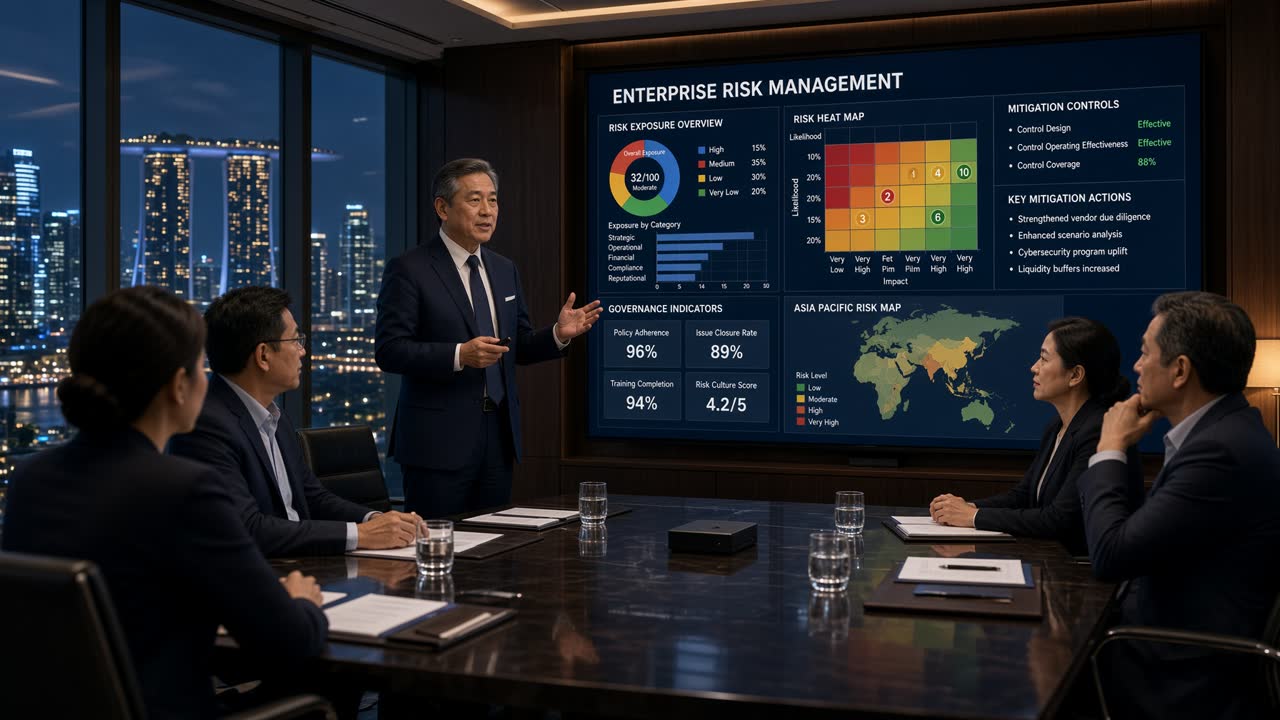
Explains the difference between source of wealth and source of funds under MAS Notice 314 and what evidence MAS inspectors expect on higher risk life insurance files. Includes screening, monitoring, distributor and inspection readiness steps for direct life insurers.
Under MAS Notice 314, a direct life insurer must be able to show, for each customer it rates as higher risk, how it established where the customer's wealth came from and where the money paying the premium came from, and that the evidence matches what it knows about the customer. For MAS Notice 314 insurers, the revised notice and accompanying guidelines raise the standard from collecting documents to testing and recording a reasoned conclusion. This article sets out what that means in practice for onboarding, premium payments and inspection readiness.
Who Notice 314 applies to
MAS Notice 314 is the legally binding AML/CFT notice for life insurers, which includes the life business of composite insurers. It sits alongside the Guidelines to Notice 314, which explain how MAS expects the requirements to be applied. General insurers and reinsurers are generally addressed through guidelines rather than this notice, and MAS expects them to apply a proportionate, risk-based approach of their own.
Before assessing any control, confirm which version of the notice and guidelines your entity is working from. MAS revised the AML/CFT framework for the sector on a compressed implementation timeline, and a policy library that still cites superseded paragraph numbers is an early signal to an inspector that the framework has not been refreshed. Obtain the current text from MAS and map each requirement to a named control owner. Summaries, including this one, are not a substitute for the notice itself.
Source of wealth and source of funds are different questions
The two concepts are frequently merged in onboarding forms, and that is the first weakness inspectors look for.
Source of funds answers a transaction question: where did the money used to pay this premium or top-up come from, and through which account or instrument was it paid? It is about the specific payment. Source of wealth answers a customer question: how did the customer accumulate their overall net worth, such as employment income, business ownership, inheritance or the sale of property or investments?
A policyholder can have a perfectly legitimate source of wealth and still present a suspicious source of funds, for example a single large premium paid from a third party account unrelated to the customer. Equally, a clean bank transfer from the customer's own account tells you little about whether the underlying wealth is explained. Your customer due diligence insurance Singapore procedures should therefore capture both, record them separately and show how each was corroborated.
When enhanced due diligence is triggered
The notice requires a risk-based approach, and enhanced due diligence applies where the risk is higher. For life insurers the usual triggers include politically exposed persons and their family members and close associates, customers from or connected to higher risk jurisdictions, complex ownership structures, and products with an investment or cash value feature that allow large or irregular premium payments, early surrender or policy loans.
Single premium and investment-linked products deserve particular attention. These are the products where the premium can be large relative to the customer's declared profile and where value can be moved out quickly through surrender or withdrawal. A risk-scoring model that rates a customer as standard because the policy is a protection product, then fails to re-score when the customer later adds a large top-up, is a recurring finding in the sector.
Document the triggers in the customer risk assessment methodology, state the threshold at which source of wealth evidence becomes mandatory, and make sure the threshold is calibrated to your own book rather than copied from a bank.
Evidence MAS inspectors expect to see
A source of wealth entry that reads "salary" or "business income" is not evidence. For a higher risk customer, the file should show four things.
First, the narrative: a short written explanation of how the customer's wealth was built, in enough detail to be tested against the customer's occupation, age and stated net worth.
Second, corroboration: documents or independent information supporting the narrative, such as audited accounts or tax assessments for a business owner, a sale and purchase agreement for a property disposal, probate documents for an inheritance, or employer confirmation combined with payslips. The depth of corroboration should rise with the risk and the size of the premium.
Third, the reasonableness test: a recorded judgement that the explained wealth is consistent with the size of the premium and the proposed policy, with any discrepancy explained or escalated.
Fourth, approval: evidence that the right level of senior management approved the relationship where the notice requires it, and when.
Where the evidence is thin, the file should show what the insurer did about it, whether that was declining the business, requesting more information or filing a suspicious transaction report. A file with a gap and no documented response is treated far more severely than a file with a gap and a clear, reasoned decision.
Screening and ongoing monitoring
Customer due diligence does not stop at onboarding. Notice 314 expects screening against sanctions and designated person lists, adverse media and politically exposed person databases, both at onboarding and on an ongoing basis when lists change or when the customer's profile changes. The insurer must also be able to identify and screen beneficial owners, and, for policies, beneficiaries and parties who pay premiums.
Two gaps recur. The first is payor screening: a third party paying premiums on behalf of the policyholder is screened and understood only in higher risk cases, if at all. The second is event-driven review: change of beneficiary, assignment of the policy, partial surrender, policy loan and change of premium payor are moments where money laundering risk concentrates, yet many operational workflows do not route them to compliance.
Monitoring rules should be tested periodically. Run a sample of known scenarios through the transaction monitoring system, confirm alerts are generated, and keep the testing record. Alert disposition notes should explain why an alert was closed, not merely state that it was reviewed.
Reporting suspicious transactions
Where the insurer has reasonable grounds to suspect that property is connected to criminal conduct, it must file a suspicious transaction report with the Suspicious Transaction Reporting Office. The internal path from front-line staff or the agency or distribution channel to the money laundering reporting officer needs to be fast, documented and free of any filter that could suppress a report. Record why a report was filed, or why an escalation was closed without filing.
Source of wealth and source of funds findings feed this process directly. An inability to obtain satisfactory evidence, or a refusal by the customer to provide it, should prompt a documented consideration of whether to report and whether to continue the relationship.
Record keeping and the role of distributors
The notice sets record keeping requirements for customer due diligence information and transaction records, and the insurer should be able to retrieve a complete file promptly during an inspection. Reliance on agents, brokers, financial advisers and bancassurance partners for any part of due diligence needs careful handling: the insurer remains accountable for the outcome. Where a distributor collects source of wealth information, the insurer should define the standard, test samples of the files received, and retain the right to obtain underlying documents.
A practical readiness checklist
For a life insurer preparing for an inspection or an internal audit, the following sequence is a reasonable approach.
- Map the current Notice 314 and guidelines requirements to controls and owners, and record any gaps with dates and owners for remediation.
- Rewrite the onboarding and periodic review forms so that source of wealth and source of funds are captured separately, with a free text narrative and a corroboration field.
- Define quantitative thresholds for mandatory source of wealth evidence by product type, and confirm the system re-scores risk on top-ups and other trigger events.
- Sample a population of higher risk files, including politically exposed persons and single premium policies, and test each against the four evidence elements above.
- Review distributor arrangements and test the quality of due diligence collected on the insurer's behalf.
- Brief the board and senior management on findings, because MAS expects evidence of governance and not only of procedures.
Next steps
Insurers that cannot tell, file by file, how they know where a higher risk customer's money came from will find that gap exposed quickly in an inspection. Alpha Consultant supports licensed insurers with AML/CFT gap assessments, policy and procedure rewrites and file testing against MAS expectations. To discuss a review of your Notice 314 framework, see our AML/CFT advisory service, or speak to us about related regulatory licensing obligations.
Questions about how this applies to your organisation? Our consultants are available to discuss your specific position.
More in Regulatory
Briefing details
- Category
- Regulatory
- Reading time
- 8 min read
- Published
- 5 November 2026