What to Expect from an ORSA Advisory Engagement
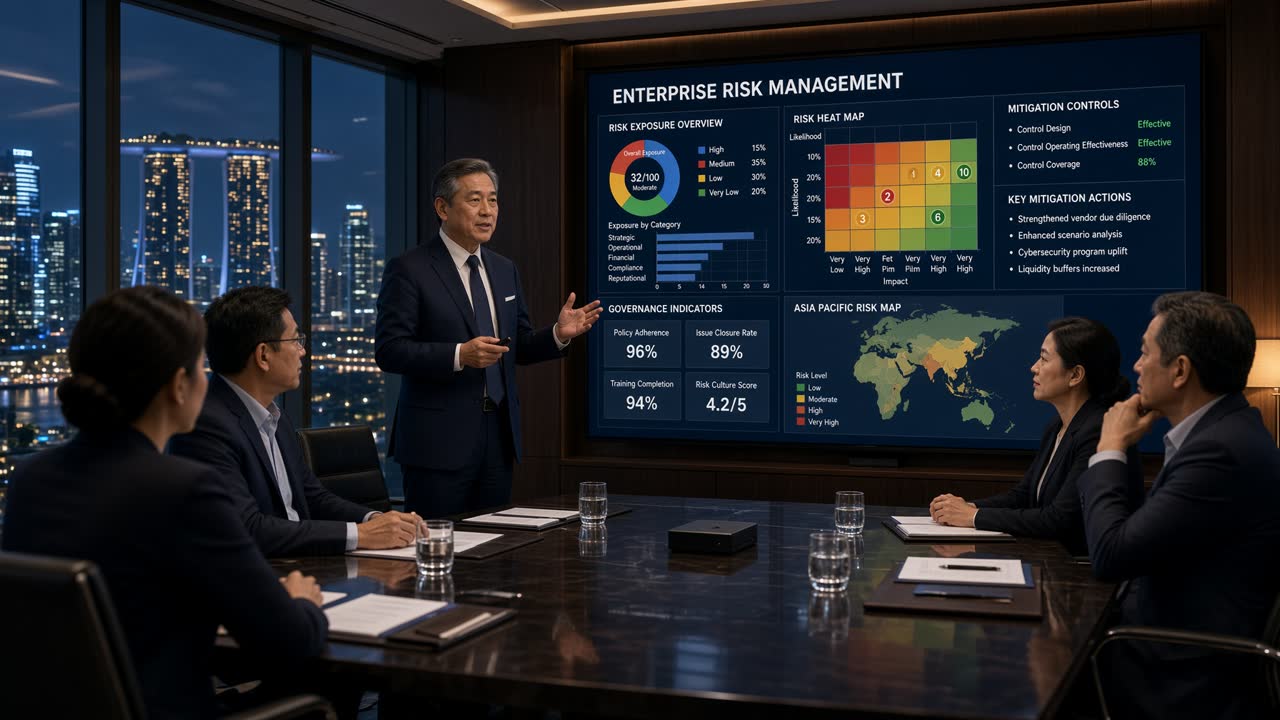
A practical guide to what an ORSA advisory engagement involves, what a quality ORSA review covers, the most common gaps external reviews find, and how to get the most from working with an external adviser.
Why ORSA Advisory Exists
The Own Risk and Solvency Assessment is one of the more demanding regulatory requirements facing Singapore-licensed insurers. It requires the board and senior management to demonstrate that they understand the company's risk profile, have assessed the capital implications of that risk profile under forward-looking scenarios, and can show that the organisation holds adequate capital relative to its own risk tolerance -- not just relative to the regulatory minimum.
That is a substantive exercise. For smaller insurers without large in-house risk teams, and for boards that are not yet accustomed to engaging with risk and solvency in this structured way, it is also a challenging one. External ORSA advisory exists to help insurers meet the requirement credibly rather than as a box-ticking exercise.
This article explains what an ORSA advisory engagement typically involves, what a quality ORSA review covers, and how to get the most from working with an external adviser.
What an ORSA Advisory Engagement Can Cover
External ORSA support takes different forms depending on what the insurer needs.
Independent review of an existing ORSA is the most common engagement type. The insurer has produced an ORSA report and wants an external party to assess whether it meets the standard MAS would expect. The review covers the scope and structure of the ORSA, the quality of the risk assessment, the appropriateness of the stress scenarios, the credibility of the capital projections and whether the board can demonstrate genuine ownership of the findings.
ORSA framework development is typically engaged by insurers that are building their ORSA capability from scratch or significantly overhauling an existing framework. The work covers how the ORSA process is designed, how risk assessments feed into the solvency projections, how scenarios are selected and calibrated, and how the ORSA findings are reported to the board and used in decision-making.
ORSA training and facilitation is used by boards and risk committees that want to improve their engagement with the ORSA process. The board is required to own the ORSA -- not simply to receive it. Training on what the ORSA is trying to demonstrate and what questions the board should be asking makes the board's engagement more substantive and more credible to MAS.
ORSA remediation support follows an independent review or a regulatory inspection where gaps in the ORSA framework or report have been identified. The adviser works with the insurer to address specific findings and strengthen the framework before the next ORSA cycle.
What a Quality ORSA Review Covers
An ORSA review that meets the standard MAS would expect goes beyond checking that the required sections are present. It assesses whether the ORSA is a genuine assessment of the insurer's risk and solvency position.
Risk identification and assessment. The ORSA should identify all material risks facing the insurer -- not just the risks that appear in the standard regulatory risk categories. A quality review assesses whether the risk inventory is complete and whether the assessment of each risk reflects the insurer's actual situation rather than generic descriptions.
Risk appetite. The ORSA should demonstrate that the insurer has a defined risk appetite that is connected to its business strategy and that is used in decision-making. A risk appetite statement that exists only as a document and is not reflected in the way management makes decisions is not a credible risk appetite.
Stress scenarios. The scenarios used in the ORSA capital projections should be genuinely stressful -- not so mild that the capital implications are trivial -- and should be relevant to the specific risks the insurer faces. Scenarios that are generic, that do not reflect the insurer's actual risk profile, or that are calibrated to confirm that the insurer is well-capitalised under all circumstances are a common ORSA weakness.
Capital projections. The forward-looking solvency projections should be based on realistic assumptions about the insurer's business plan and should demonstrate how the capital position evolves under the base case and stress scenarios. The projections should show not just that the insurer meets the regulatory minimum but how much capital headroom it maintains and what management actions would be available if capital fell below target levels.
Board engagement. MAS expects the board to own the ORSA. The report and the process behind it should demonstrate that the board has been involved in the risk assessment, has challenged the assumptions and scenarios, and has drawn conclusions from the ORSA findings about the organisation's risk and capital management. An ORSA that the board simply approves without genuine engagement does not meet the regulatory expectation.
Common Gaps That External Reviews Find
Independent ORSA reviews consistently identify a small number of recurring weaknesses.
Scenarios that are too mild. Stress scenarios calibrated to produce comfortable results rather than to test the insurer's resilience are the single most common finding. The purpose of stress testing is to identify vulnerabilities, not to confirm that the organisation is well-capitalised under all plausible conditions.
Disconnection between the ORSA and business strategy. The ORSA should reflect the risks arising from the insurer's actual business strategy, including planned new products, market expansion and changes in reinsurance arrangements. An ORSA that treats the business as static rather than forward-looking misses its purpose.
Risk appetite that is not operationalised. Many insurers have a well-worded risk appetite statement that is not connected to how decisions are actually made. The ORSA should show how risk appetite limits are monitored and how breaches or near-breaches are escalated.
Thin board engagement. Board minutes and board papers that show the board received the ORSA report without meaningful challenge or discussion do not demonstrate the board ownership that MAS expects.
Inadequate capital projection methodology. Capital projections that do not properly model the interaction between the business plan, investment assumptions and the RBC2 capital requirements -- or that do not include a credible range of scenarios -- are a recurring weakness in smaller insurers.
How to Get the Most from External ORSA Support
External ORSA advisory is most valuable when the insurer uses it to genuinely improve the quality of the ORSA process, not just to produce a report that satisfies a regulatory obligation.
Engage the adviser early enough in the ORSA cycle to act on their input. An independent review conducted a week before the submission deadline can identify gaps but leaves little time to address them.
Brief the adviser on the insurer's business strategy, risk profile and any areas of regulatory sensitivity before the review begins. The adviser cannot identify all of the context-specific issues without understanding the business.
Use the findings from an independent review to drive a genuine improvement plan. An ORSA that addresses the same weaknesses year after year is not improving. The value of an independent review is in the candid assessment of what needs to change.
Involve the board in the ORSA process earlier than the final approval stage. Boards that have been involved in setting risk appetite, selecting stress scenarios and reviewing preliminary capital projections are better placed to engage substantively with the final report.
Our ORSA advisory work covers independent ORSA reviews, framework development, board training and remediation support for Singapore-licensed insurers. Our advisers have direct experience of the ORSA requirements under the Singapore RBC2 framework and of the standard MAS expects in regulatory submissions and inspections. If you are preparing for an ORSA review or want to improve the quality of your ORSA framework, our team is available to discuss your requirements.
Questions about how this applies to your organisation? Our consultants are available to discuss your specific position.
Briefing details
- Category
- Risk
- Reading time
- 7 min read
- Published
- 20 October 2026