Singapore Protected Cell Company Framework: What the MAS Consultation Means for Captives and ILS Sponsors
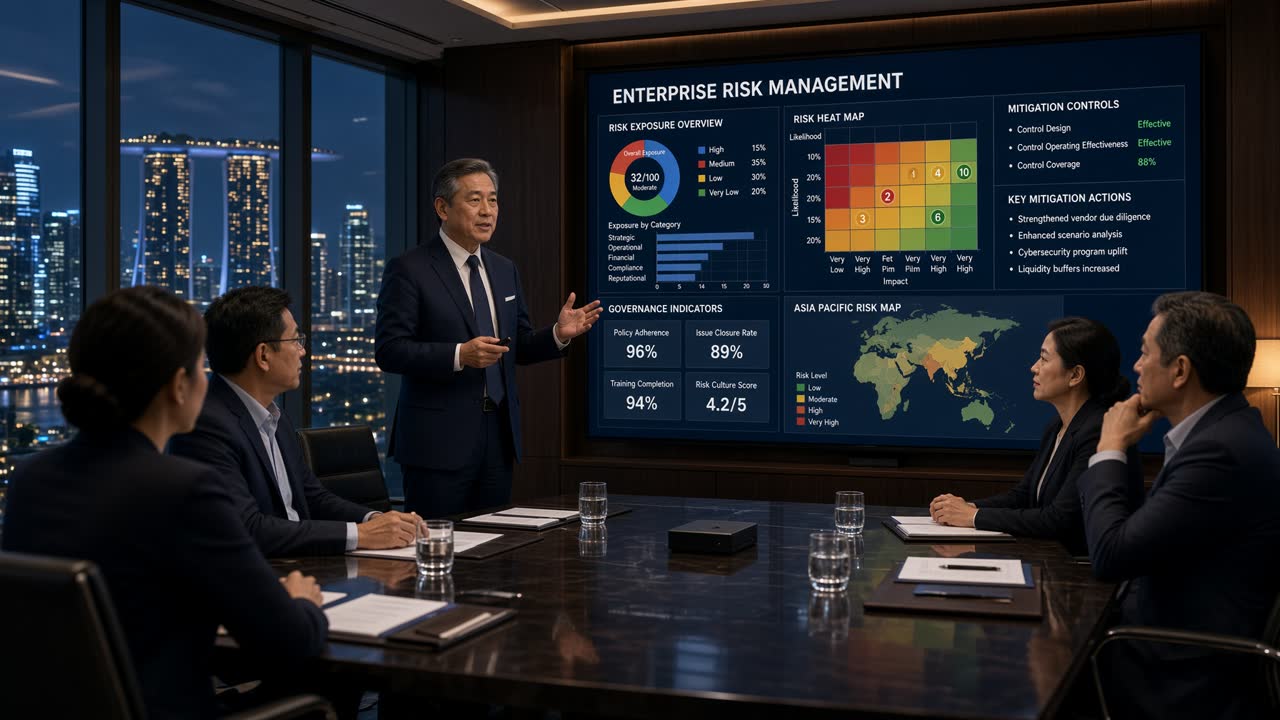
MAS consulted in July 2026 on a protected cell company framework with captive insurance and insurance-linked securities as initial use cases. This article explains how a cell structure differs from a standalone captive, the design questions still open and how sponsors should prepare while legislation is pending.
Singapore protected cell company insurance is not yet a product you can license. On 7 July 2026 the Monetary Authority of Singapore (MAS) consulted on a legislative framework for protected cell companies (PCCs), naming captive insurance and insurance-linked securities (ILS) among the initial use cases. Until legislation is passed and commences, sponsors cannot rely on a cell structure, but they can decide now whether their captive or ILS plans should be built to migrate into one. This article sets out what a PCC is, how it differs from a standalone captive, the questions the consultation leaves open and the preparation that is worth doing while the framework is pending.
Please treat the details below as our reading of the public consultation and general market practice. Proposals can change between consultation and enactment, so confirm every point against the current MAS paper and the final legislation before committing capital or filing an application.
What a Protected Cell Company Is
A protected cell company is a single legal entity divided into a core and a number of cells. Each cell holds its own assets and liabilities, and the legal design is intended to ring-fence the assets of one cell from the creditors of other cells and of the core. The core typically holds the entity's capital, board and administrative functions, while cells hold the risk and assets attached to an individual participant, programme or transaction.
The attraction is cost and speed. Under the current approach, each captive or special purpose vehicle is a separate company with its own incorporation, board, audit, regulatory filings and service contracts. In a cell structure, a sponsor or a cell owner uses the shared infrastructure of the core and bears only the incremental cost of its own cell. For small risk retention programmes, that difference can decide whether a captive is economic at all.
The central legal question is whether segregation holds. A cell is not a separate legal person in most PCC regimes; the protection comes from statute and from disciplined record keeping. Investors, fronting insurers and rating agencies will therefore ask how segregation is evidenced, how cell assets are identified and what happens if a cell is insolvent. The final Singapore legislation will matter more here than any marketing description of the structure.
How a Protected Cell Captive Differs From a Standalone Captive
Today, a corporate group that wants to retain risk through a captive applies to MAS for a captive insurer licence, incorporates or registers an entity and carries the full governance and compliance burden of a licensed insurer. Our guide to setting up a captive insurer in Singapore walks through that sequence and the MAS captive toolkit.
A protected cell captive would work differently in three respects. First, the group would typically rent or own a cell within a PCC rather than own the whole insurer. Second, governance would be split between the PCC's core board and the cell owner, which raises the question of who is accountable to MAS for cell-level underwriting, claims and reserving. Third, capital and solvency would have to be assessed at both core and cell level, with rules on whether one cell's deficiency can be met from another.
None of these points has a settled answer until MAS publishes its response and the legislation is drafted. Sponsors should avoid assuming that a cell will be treated as a lighter-touch version of a captive licence. A cell holding meaningful insurance risk is still insurance business, and we would expect MAS to apply the same prudential logic, adjusted for the structure. Groups weighing the two routes should compare them against the licence categories in our overview of Singapore insurer licence types.
Implications for ILS Sponsors and Alternative Risk Transfer
For ILS sponsors, the practical benefit of a PCC is the ability to host several transactions in separate cells inside one vehicle. Today each collateralised reinsurance or catastrophe bond deal tends to use its own special purpose vehicle, and the set-up cost is a real barrier for smaller or first-time sponsors. A multi-cell vehicle could lower the marginal cost of each additional deal.
This matters for alternative risk transfer in Singapore more broadly. Captives, collateralised reinsurance and ILS sit on a spectrum of risk financing, and a flexible legal wrapper makes it easier for a group to start with a small captive programme and later add a capital markets component. Our article on the MAS collateralised reinsurance and ILS consultation covers the ILS side, the contrast with the existing special purpose reinsurance vehicle route and the grant scheme in more detail.
Investors will ask different questions from regulators. They will want to know how cell assets are held and valued, how collateral is protected, whether the core can draw on cell assets and what governance prevents conflicts between cells. Offering documents will need clear answers, and sponsors should expect scrutiny of the service providers who administer the core.
Questions the Consultation Leaves Open
Several design points will determine how useful a Singapore PCC is in practice. Sponsors should watch for MAS and legislative positions on the following.
- Segregation and insolvency: how cell assets are identified, and how a cell insolvency is handled without contaminating other cells.
- Licensing perimeter: whether the PCC itself, each cell, or both require a licence or authorisation, and what a cell owner must file.
- Capital: minimum capital at core and cell level, and whether capital can be shared or must be held separately.
- Governance: who sits on the core board, what duties it owes to each cell, and how conflicts between cells are managed.
- Permitted business: whether cells may write third-party business or are limited to the owner's own risks and ILS transactions.
- Cross-border recognition: how foreign regulators, fronting insurers and rating agencies will treat a Singapore cell.
- Tax: the tax treatment of cell income and of transfers between cells, on which sponsors should take separate advice.
Each of these points feeds into the business case. A structure that is cheap to run but not recognised by a fronting insurer, or that cannot be rated, will not attract sponsors regardless of its legal elegance.
Domicile Competition and Positioning
Singapore is not designing a PCC in a vacuum. Several established captive and ILS domiciles already offer cell structures, and sponsors will compare Singapore against them on speed to licence, cost, regulatory predictability and access to reinsurance and capital markets talent. The Singapore proposition is likely to rest on its onshore regulatory credibility, financial infrastructure and proximity to Asian risk, rather than on the lowest cost of formation.
That positioning affects who should care. A multinational with exposures across Asia that already uses a captive elsewhere may see a cell in Singapore as a way to consolidate regional risk financing. A regional group considering its first captive may prefer to wait for the cell option if its premium volume is small. A reinsurer or asset manager seeking a repeatable platform for ILS issuance may see more value in the multi-transaction capability.
Whatever the profile, the decision should rest on a documented feasibility study, covering premium spend by line, retention appetite, fronting needs, local insurance placement rules in each country and the expected capital cost. Expect MAS and fronting insurers to ask for the same evidence.
How to Prepare While the Framework Is Pending
Waiting is not the same as doing nothing. The following steps are worth taking now, and they remain useful whether or not the final framework matches the consultation.
First, respond to the consultation or brief someone who will. Practical views from prospective sponsors on segregation, licensing and capital carry weight with a regulator drafting rules. Check the MAS website for the closing date and format.
Second, map your pipeline. For each planned captive programme or ILS transaction, list the likely structure options: standalone captive, standalone special purpose vehicle, or a cell of a future PCC. For each option, record the regulatory permissions, the parties involved, the capital and the approvals needed.
Third, build for portability. Draft risk retention policies, reinsurance programme designs, actuarial assumptions and governance documents so they can be adapted to a cell structure. Groups that need reserving and capital analysis for a new entity can draw on actuarial consulting support to test how a cell would perform under stressed scenarios.
Fourth, strengthen the risk framework. A cell owner will still need risk appetite, reinsurance credit risk limits and a view of solvency under stress. Our enterprise risk management team helps captive boards document these in a form MAS and fronting insurers will accept.
Fifth, open early dialogue with MAS on any structure that does not fit existing categories. Pre-filing discussions are cheaper than rework after an application has started.
Next Steps for Captive and ILS Sponsors
If you are weighing a standalone captive against a protected cell structure, or planning an ILS programme that may later move into a cell, the licensing path needs to be mapped before capital is committed. Speak to our regulatory licensing team about structuring your application and preparing for the MAS framework as it develops.
Questions about how this applies to your organisation? Our consultants are available to discuss your specific position.
More in Regulatory
Briefing details
- Category
- Regulatory
- Reading time
- 8 min read
- Published
- 10 November 2026