Singapore Insurer Licence Types Explained: Direct, Reinsurer, Captive and Authorised Reinsurer
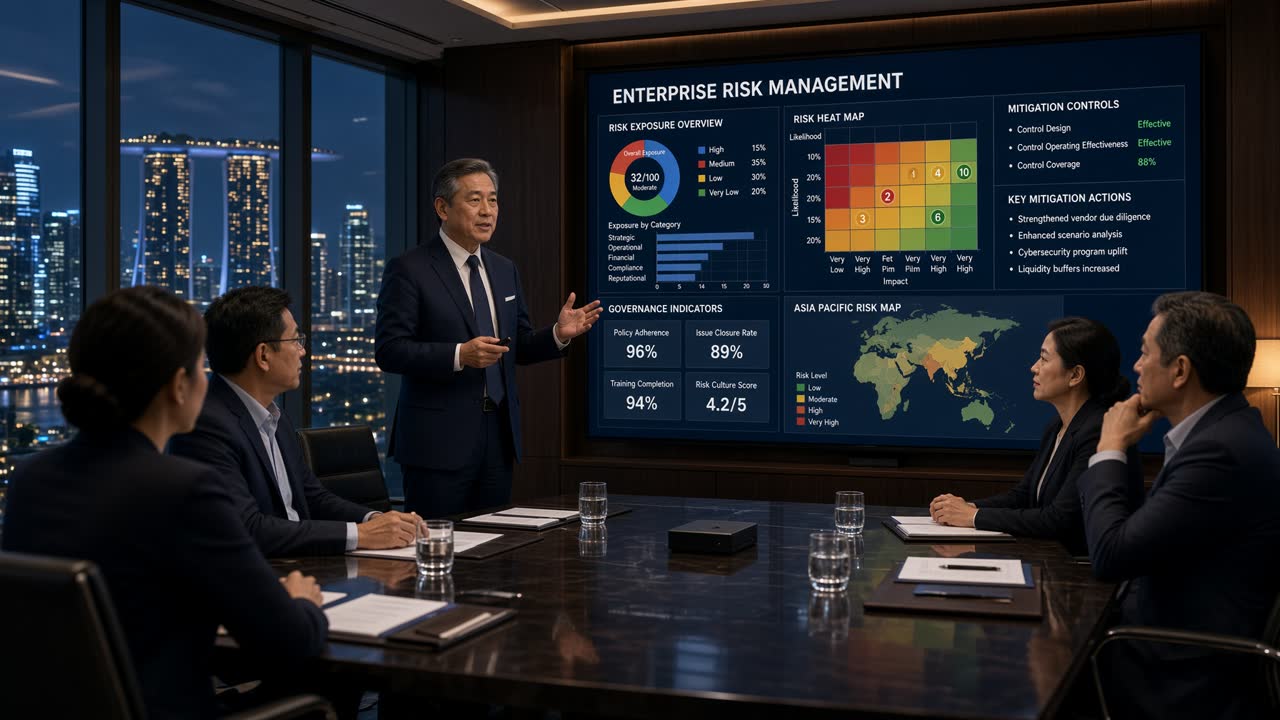
A side-by-side comparison of the MAS insurer licence routes in Singapore: direct insurer, reinsurer, captive and authorised reinsurer. Covers how to choose, what each route demands and what drives application timelines.
The MAS insurer licence types that matter for most applicants are the direct insurer licence, the reinsurer licence, the captive insurer licence and authorised reinsurer status. The right choice depends on whose risks you will underwrite, whether you need to write business with Singapore policyholders, and how much of the regulatory framework you are prepared to carry. Choosing the wrong route is expensive: a captive structure cannot be used to write third-party business, and a full direct insurer licence is disproportionate for a group that only wants to retain its own risks.
This guide compares the routes side by side, explains what changes in the regulatory burden between them, and sets out realistic timeline expectations for a MAS licence application in insurance. It is written for general counsel, compliance heads and finance leads who need to settle the structure before instructing lawyers and actuaries.
The Legal Basis for Insurer Licensing
Insurance business in Singapore is regulated under the Insurance Act 1966. A person carrying on insurance business in or from Singapore generally needs to be registered or licensed by MAS, and the category of licence determines which subsidiary legislation and notices apply. The relevant instruments typically include the Insurance (Valuation and Capital) Regulations for the RBC2 solvency framework, MAS Notice 126 on enterprise risk management for insurers, MAS Notice 133 on valuation and capital, and the corporate governance and fit and proper requirements that apply to directors and key appointment holders.
MAS publishes a separate application page and compliance toolkit for each licence category. The pages are accurate but do not compare the routes, which is why applicants often make a structural decision before understanding the trade-offs. The sections below set out each route in turn.
Direct Insurer Licence
A direct insurer writes insurance contracts with policyholders: individuals, businesses or both. Direct insurers may be licensed to write life business, general business or both (a composite insurer). This is the full licence, and it carries the heaviest obligations.
A licensed direct insurer must meet the risk-based capital requirements under RBC2, maintain separate insurance funds where the Insurance Act requires them, and appoint an Appointed Actuary where life business or other prescribed business is written. It must also have a board-approved enterprise risk management framework and produce an ORSA under Notice 126, and submit regulatory returns to MAS on the prescribed timetable. Appointments of directors, chief executive and other key appointment holders are subject to MAS approval under its fit and proper framework.
The direct insurer route is the right one when you intend to distribute products to the Singapore public or to commercial clients and need to issue policies in your own name. It is also the route with the longest preparation period, because MAS will examine the business plan, the financial projections, the capital plan and the senior management team in detail. Our guide on preparing a MAS insurance licence application covers what MAS tends to scrutinise.
Reinsurer Licence
A licensed reinsurer in Singapore accepts risks ceded by other insurers and does not write direct business with the public. Singapore has developed as a reinsurance hub, and many Asian and global groups run regional reinsurance underwriting from a Singapore-incorporated entity or a Singapore branch of a foreign reinsurer.
The reinsurer route is appropriate when the business model is to underwrite treaty or facultative business from cedants across the region. Reinsurers are subject to the capital and governance framework appropriate to their risk profile, including ERM and ORSA expectations, and must maintain a credible approach to retrocession and counterparty exposure. MAS pays particular attention to the quality of the group relationship where the Singapore entity is part of a larger reinsurance group, including intra-group retrocession, shared services and the extent to which Singapore holds real underwriting authority.
For applicants weighing the market, our overview of reinsurance regulatory requirements across APAC sets out how Singapore compares with other jurisdictions.
Captive Insurer Licence
A captive insurer is a licensed insurer that underwrites the risks of its parent and related group entities rather than the open market. Singapore has a long-standing captive framework, and a captive licence is the natural choice for a corporate group that wants to retain predictable risks, access reinsurance markets directly, and manage its total cost of risk.
The attraction of the captive route is proportionality. MAS applies a framework calibrated to the fact that the policyholders are group companies rather than the public, which generally means a lighter set of conduct and disclosure obligations than a direct insurer faces. A captive still needs a proper capital base, a competent board, a sound underwriting and claims process, an actuarial view of its reserves and a risk management framework suited to its size. It must also have a registered office and a presence in Singapore through its management arrangements, and most captives appoint a licensed captive manager to run day-to-day operations.
The practical constraint is scope. A captive cannot be used to write business for unrelated third parties, so a group that later wants to sell insurance to customers or to fronting partners needs to revisit its licence category. Captive applicants should therefore think through the five-year strategy before filing rather than treating the licence as a cheap entry point.
Authorised Reinsurer Status
An authorised reinsurer is a foreign reinsurer that MAS has authorised so that Singapore cedants can obtain regulatory credit for reinsurance placed with it, without the reinsurer establishing a licensed presence in Singapore. It is a recognition route rather than a licence to carry on business from Singapore, and the regulatory obligations are accordingly different.
This route suits an overseas reinsurer that wants to accept cessions from Singapore insurers on a cross-border basis and has no need for Singapore underwriting staff. The attraction is speed and lower cost of entry compared with setting up a subsidiary or branch. The limitation is that it does not give the reinsurer a base for regional underwriting, and Singapore insurers will assess the reinsurer's credit standing and the treatment of the cession under their own capital calculations.
If the plan is to underwrite regional business from Singapore and build local talent, a reinsurer licence is the stronger platform. If the plan is simply to access Singapore cedants from home, authorised reinsurer status deserves serious consideration.
Comparing the Four Routes
The decision usually turns on four questions.
Who are the policyholders? If they are the public or unrelated commercial clients, only a direct insurer licence works. If they are group companies, a captive is the likely fit. If the counterparties are other insurers, the reinsurer licence or authorised reinsurer status applies.
Do you need a physical presence? Direct insurers, reinsurers and captives all require a substantive Singapore presence and a locally accountable management team. Authorised reinsurer status does not.
How much regulatory infrastructure do you want to build? Direct insurers carry the full framework including product and conduct obligations. Captives and reinsurers carry a calibrated framework but are not exempt from governance, risk and actuarial requirements.
What does the growth plan look like? A licence category should support the business you intend to run in three to five years, because converting between categories means a new application and a fresh MAS review.
Processing Time and What Drives It
Timeline estimates for a MAS licence application in insurance vary. MAS indicates that processing can take up to three months from receipt of a complete application, while law firm commentary often cites six to eight weeks for straightforward cases. Both figures assume a complete and credible submission. The clock is driven less by MAS than by the applicant: preparing the business plan, capital projections, governance documents and key appointment holder applications often takes longer than the review itself.
Delay usually comes from three sources. Information gaps trigger query rounds, each of which adds time. Late changes to the shareholder structure or senior appointments require MAS to reassess the application. And capital projections that do not reconcile to the business plan raise credibility concerns. Allow time for a pre-application discussion with MAS, and treat any timeline quoted by an adviser as a planning estimate rather than a commitment.
Planning the Application
Once the route is settled, preparation should run in parallel across five workstreams: the legal entity and shareholder structure, the business plan and financial projections, the capital and solvency plan under RBC2, the governance and risk management framework including ERM and ORSA design, and the fit and proper assessments for directors and key appointment holders. Requirements and fees change, so confirm the current MAS application page and compliance toolkit for your licence category before you finalise any documents.
If you are deciding between direct insurer, reinsurer, captive and authorised reinsurer routes, or preparing a submission to MAS, speak to our team about regulatory licensing to settle the structure and build an application that is complete on first submission.
Questions about how this applies to your organisation? Our consultants are available to discuss your specific position.
More in Regulatory
Briefing details
- Category
- Regulatory
- Reading time
- 8 min read
- Published
- 28 October 2026